Ahead of your visit
Night guards
One appointment, explained before it starts.
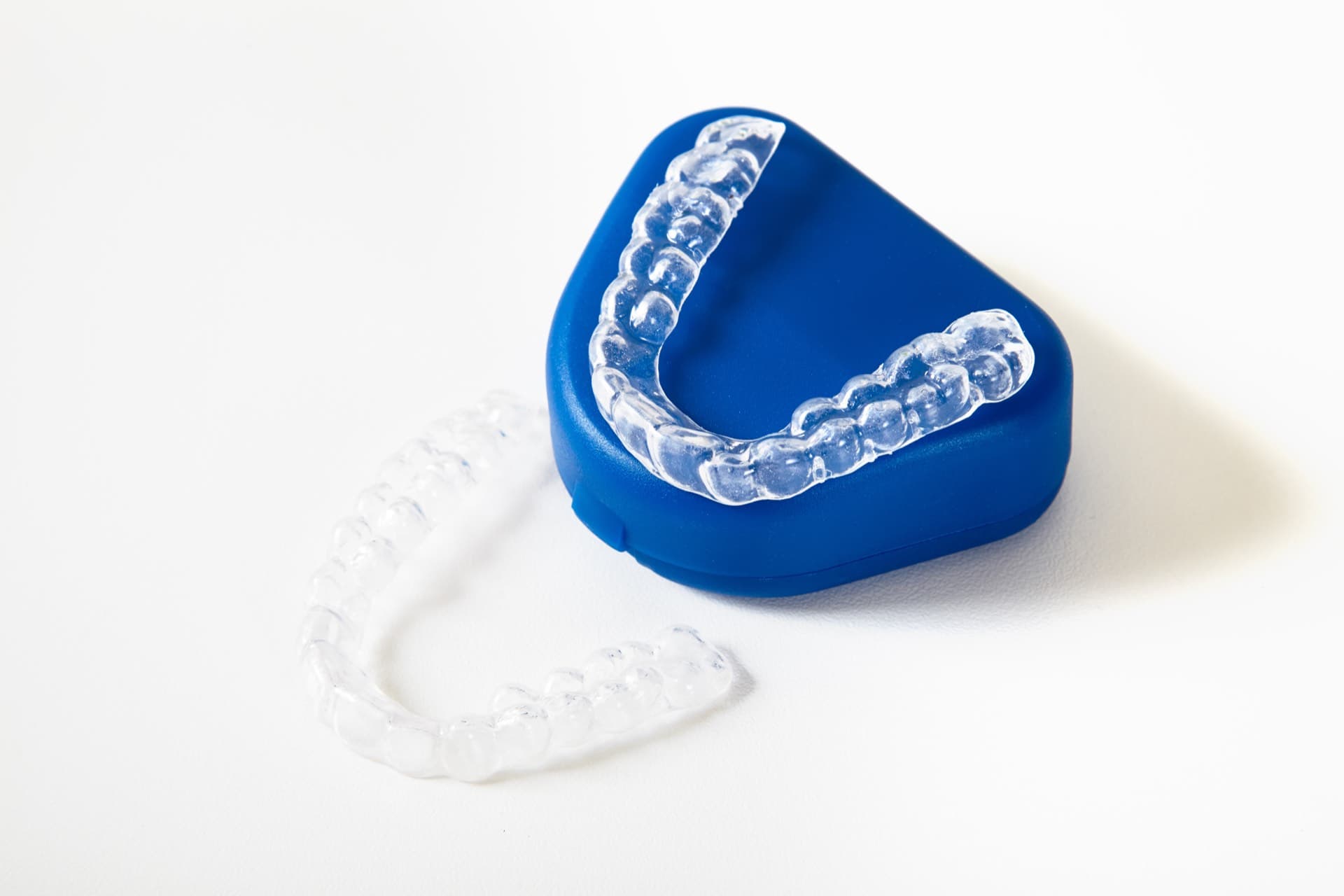
A night guard sits between your upper and lower teeth while you sleep, taking the pressure of grinding or clenching so your teeth don't have to. Bruxism, the term for that grinding and clenching, can chip an edge, wear down enamel or loosen a filling, and it's easy to miss until the damage shows. Yours comes from an impression or a digital scan of your own bite, built specifically for your mouth rather than guessed at. At your check-up, your dentist watches for the signs and talks through whether one makes sense for you.
Why this matters
What this treatment aims to improve
Results depend on the starting condition, the treatment plan and how the mouth responds. Your dentist will explain what is realistic for your case before treatment begins.
A buffer against grinding
The guard sits between your teeth and absorbs the pressure of grinding or clenching, rather than your enamel taking the full force night after night.
Made from your own bite
An impression or digital scan captures the exact shape of your teeth, so you're getting a guard built for your mouth, not a general size.
Some protection for existing work
A crown, veneer or implant can come under real pressure from grinding too, and a guard helps take some of that load off them.
How it works
Step by step, from assessment to review
We check for the signs
Your dentist has a look for worn edges, small chips or flattened surfaces, and asks whether mornings have been bringing a sore jaw or a headache.
An impression or scan gets taken
This becomes the basis for a guard built specifically for you.
Comfort and bite, confirmed last
The finished guard is tried in and fine-tuned until it feels comfortable and your bite sits evenly, the final step once it's made.
Is it suitable for you?
Your dentist confirms what's going on before recommending a guard, but noticing signs of grinding or clenching is usually what starts the conversation.
New wear or chipping shows up
Grinding while you sleep often shows up first as flattened edges, a small chip or a crack that wasn't there before.
Waking with jaw ache or headaches
Waking to a tight or aching jaw, or a headache that wasn't there the night before, often points to clenching while you slept.
Someone's mentioned hearing you grind
A partner or family member noticing a grinding sound at night is often what prompts people to get checked.
Getting ready
Small things that help before you arrive.
Bring anything relevant
Old X-rays, a list of medications or notes on what you've noticed all help, though you're welcome to come without them.
Flag what makes it harder
If anxiety, a sensitive spot or a rough past experience make visits difficult, tell the team early so they can plan around it.
Give it enough time
A first look needs room for questions and a proper explanation, not just a quick glance and a nod.
Night guards questions
Questions patients often ask
The answers below cover what most patients experience. Your own dentist will tailor the advice to your examination, medical history and treatment plan.
It's worn while you sleep to protect your teeth from the wear caused by grinding or clenching, something called bruxism that a lot of people don't realise they're doing.
Have a different question?
Tell the clinic what you are concerned about. The team can explain the next sensible step before you decide on a visit.
Book when you're ready
Talk it through before you book.
Tell test what you've noticed and they'll help arrange the right appointment for it.
Bring whatever you're wondering about. Your dentist explains as you go, what's happening, why it matters and what comes next, so you leave with a plan that makes sense.